New Publication: The Oral Toxicity of Steinernema carpocapsae Venom Proteins


We are excited to share our newest publication in Toxins, led by Manisha Mishra, which explores a previously unknown aspect of entomopathogenic nematode biology: the oral toxicity of their venom. While Steinernema carpocapsae nematodes are well-known biological control agents, our team demonstrated for the first time that their secreted venom proteins are highly toxic when simply ingested by the destructive crop pest Spodoptera frugiperda (fall armyworm). Feeding these venom proteins to early-instar larvae caused significant developmental delays and mortality, with surviving larvae facing severe carry-over effects such as malformed pupae and a drastically reduced adult emergence rate of only 19% at the highest doses. Furthermore, surviving adult moths lived 30% shorter lives and laid over 90% fewer normal eggs, disruptions that coincided with a massive spike in the insects’ oxidative stress and detoxification enzyme activity. Ultimately, these exciting findings position nematode venom as a promising new resource for discovering eco-friendly insecticidal proteins to improve sustainable pest management strategies.

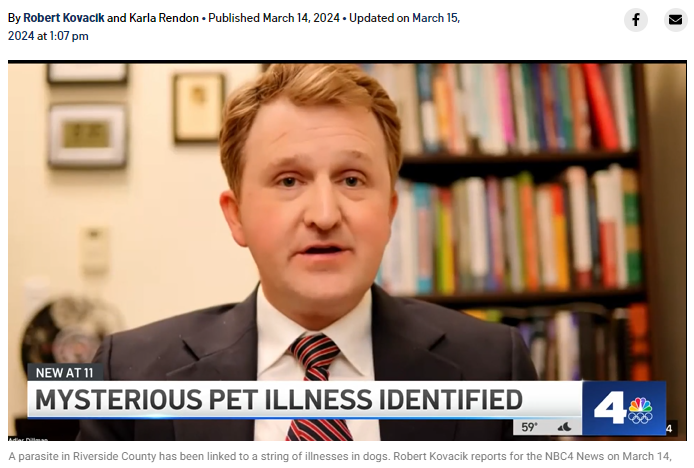
American Kennel Club Canine Health Foundation FundingProtecting Our Pups: New Grant Awarded to Track a Deadly Canine Parasite in the American WestAmerican Kennel Club Canine Health Foundation Funding

The Dillman Lab is thrilled to announce a new joint research project funded by the American Kennel Club Canine Health Foundation. This collaborative effort brings together our lab, the Aicher Lab at Texas A&M, and the Sinclair Lab at Loma Linda University to tackle the emerging threat of Heterobilharzia americana (HA), a blood fluke responsible for canine schistosomiasis.

Dr. Dillman first became involved with this specific parasite after the Los Angeles County Department of Public Health flagged local cases of HA in dogs that had never left California. This was a startling discovery because HA is a deadly parasite that causes significant suffering, leading to symptoms like chronic weight loss, diarrhea, vomiting, lethargy, and dangerous calcium imbalances. Furthermore, treating it is difficult, often requiring multiple rounds of high-dose medications.

Recognizing that dogs are beloved family members, our collaborative team set out to understand how this parasite is spreading and how we can stop it.

Our Project Goals Working together, our tri-institutional team will focus on two major initiatives:

  • Tracking Infections: We will evaluate the prevalence of HA infection in dogs residing in—or having traveled to—California, Arizona, Utah, Nevada, and Colorado from 2018 to the present. We will identify HA-infected dogs using non-invasive fecal testing.

  • Mapping the Environment: We will determine the distribution of HA in freshwater bodies along the Colorado River across California, Arizona, Utah, and Nevada to understand the environmental and epidemiological factors driving transmission.

By mapping both the environmental presence of the parasite and its impact on the canine population, our ultimate goal is to keep owners informed about where the parasite is lurking and keep our dogs safe.

Spotlight: Where Curiosity Meets Canine Health Want to learn more about the inspiration behind this research? Check out the AKC Canine Health Foundation’s recent “Meet the Scientist” feature on Dr. Adler Dillman. Read about how a lifelong fascination with science fiction and alien biology ultimately led to a career dedicated to unraveling the mysteries of host-parasite interactions!

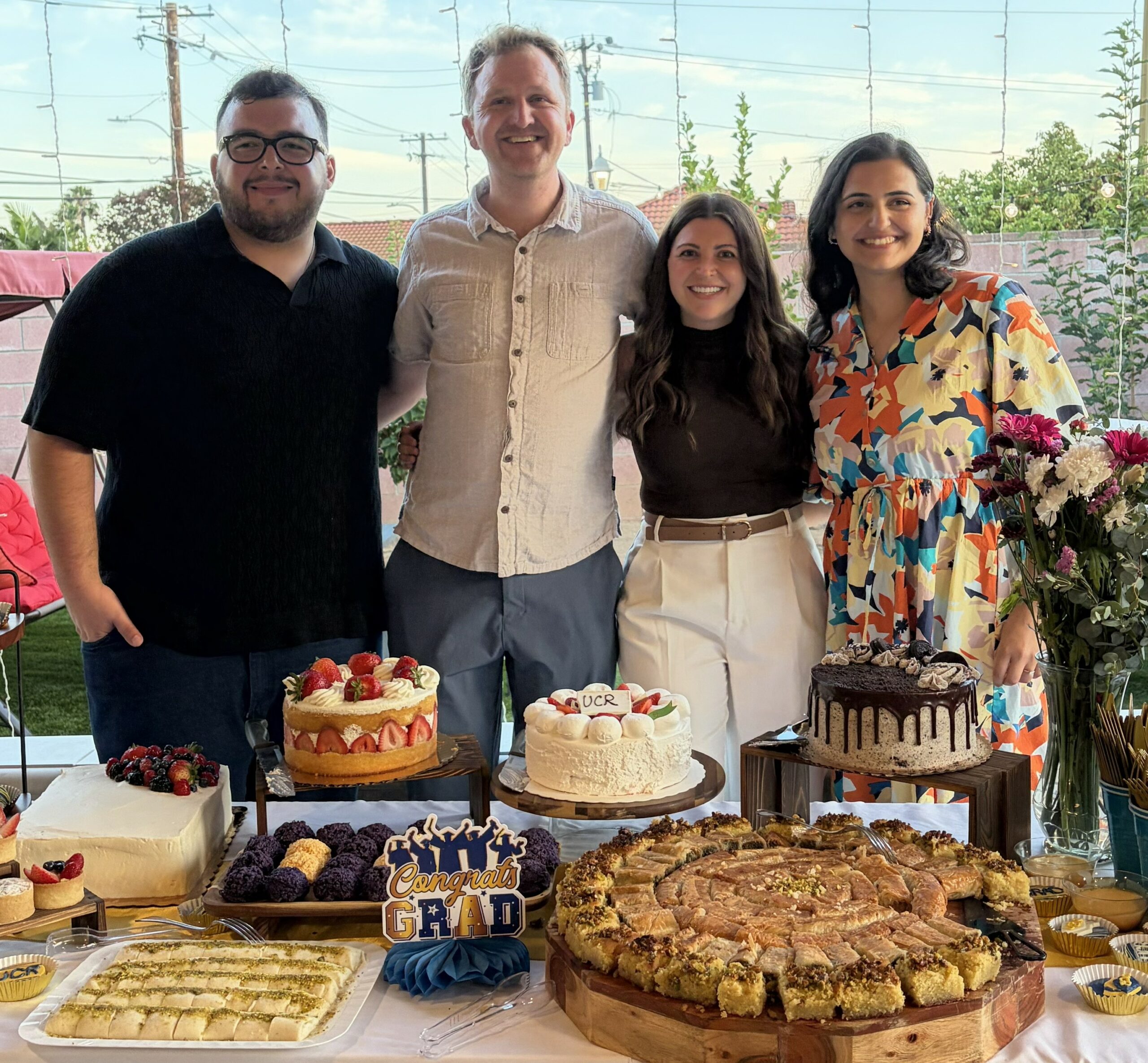
3 Students Graduate

We are incredibly proud to celebrate a massive summer graduation season in the Dillman Lab! Huge congratulations to our three departing and transitioning scholars:
-Dr. Perla Achi graduated with a Ph.D. in Cell, Molecular, and Developmental Biology. She is staying within the UCR family and has started a postdoctoral position in Simon “Niels” Groen’s lab.
-Dr. Pakeeza Azizpor graduated with a Ph.D. in Genetics and has headed north to Stanford University, where she has begun a postdoctoral position in Matias Garten’s lab.
-Robert Pena earned his Master’s degree in Biomedical Sciences. He is currently still driving projects forward in the lab while actively applying to Ph.D. programs!
We are so grateful for all your hard work, curiosity, and contributions to the lab. We can’t wait to see what you accomplish next!

Science Lecture Series 2025

Dr. Dillman is giving the May 2025 CNAS Science Lecture Series Seminar on parasitic nematodes. He will introduce the audience to the wonderful world of nematodes and share research about their amazing ability to influence host immunity. Nematodes have a profound effect on humans causing direct infections and also infecting agricultural crops and livestock. The Dillman Lab studies host-parasite interactions and in the lecture Dr. Dillman will discuss some of the projects that are ongoing in the lab.

The lecture takes place on Saturday, May 3rd, 2025 at 2pm in the Student Success Center, room 229. The lecture will be made available on Youtube.

Polyunsaturated fatty acids stimulate immunity andeicosanoid production in Drosophila melanogaster

Pakeeza and Ogadinma just published a paper in the Journal of Lipid Research. The paper shows that if arachidonic acid (AA) is injected into the fly, it stimulates production of twenty-carbon polyunsaturated fatty acids (PUFAs), also known as eicosanoids. They also showed that both linoleic acid (LA) and AA stimulate the fly immune response when D. melanogaster is exposed to a heat-killed bacterial pathogen. This work identifies PUFAs that are involved in insect immunity and adds evidence to the notion that Drosophila utilizes immunostimulatory lipid signaling to mitigate bacterial infections.


63rd Annual Society of Nematologists Meeting

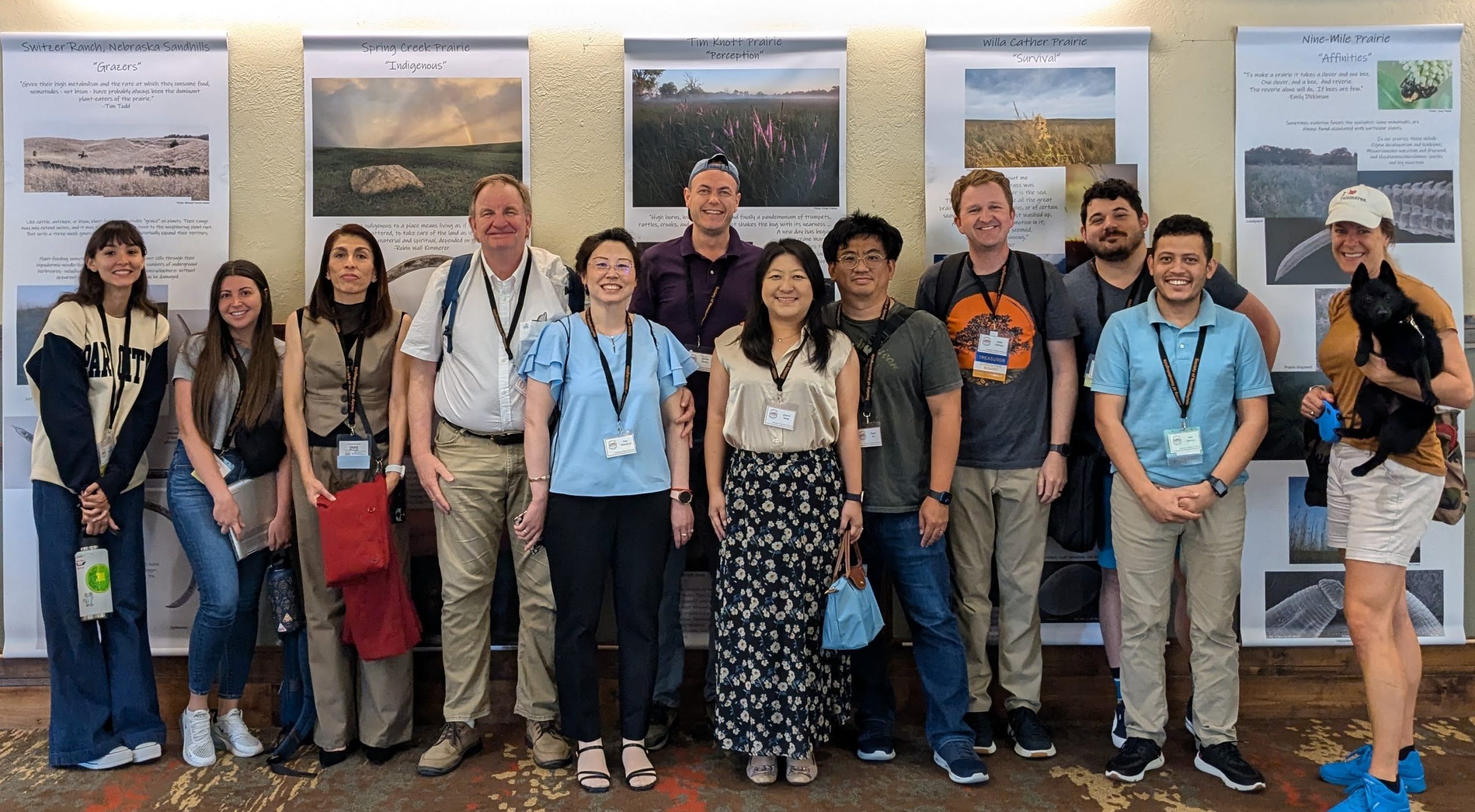
The Dillman was well-represented at the Society of Nematologists (SON) annual meeting in Park City this year. Perla Achi presented her work on cardenolides and entomopathogenic nematodes (EPNs). Kyle Anesko competed in the student competition and talked about his work on nematode proteins and immunity. Anil Baniya gave a talk on several different EPN genomes and organized the EPN symposium at the meeting this year. Lanie Bavier presented a poster on EPNs infecting milkweed bugs. And Dr. Dillman gave an overview of the lab’s work at the conference. One highlight was the incredible artwork that Tom Powers’ lab had displayed in the lobby at the conference.UCR attendees at the conference: (from left to right): Lanie Bavier, Perla Achi, Damaris Godinez-Vidal, Andreas Westphal, Fen Westphal, Simon “Niels” Groen, Jiue-in Yang, Chia-Jui “Frank” Hu, Adler Dillman, Kyle Anesko, Anil Baniya, & Sophie Zaaijer.
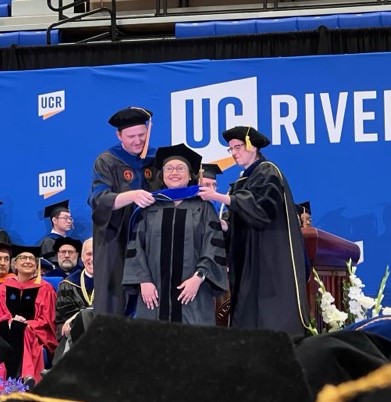
Aklima Lima Graduates!

Aklima Lima received her PhD in Biochemistry this last Saturday. She has done some nice work detailing the role of ShK-domain-containing proteins in the host-parasite interactions of Steinernema carpocapsae. She published her first paper on this topic in 2022 and has two manuscripts that she is currently working on, detailing the rest of her thesis work. Congratulations Aklima!!

Podcast on Indestructible Nematodes

Dr. Dillman recently had the pleasure of being interviewed for the podcast Constant Wonder. This podcast explores the delight found in science, art, history, and nature, and the first episode of season eight examines nematodes as indestructible creatures found all over the world, even in the most inhospitable of environments.

Dr. Dillman was interviewed with his undergraduate advisor and mentor, Dr. Byron Adams, and the two shared their love of nematodes and the research they do. They discuss everything from how they came into this field of research, to finding nematodes in Antarctica, to the idea that society may be too clean and we may need nematodes to help us fight certain diseases. The hosts also interviewed Dr. Michael Werner, a primary researcher at the University of Utah who recently discovered nematodes living in the Great Salt Lake.

It’s a great episode, and if you’d like to listen to it, you can find it here.

Dog Parasite Discovered in California

After being recruited by local veterinarians to help find the source of a parasitic infection in southern California, we identified two species of snails, Galba cubensis and G. humilis in the Colorado River in California. We also identified that some of those snails were indeed carrying Heterobilharzia americana, the fluke that causes canine schistosomiasis. Our finding is the first report of the presence of this flatworm parasite in Southern California.

New Entomopathogenic Nematode, Steinernema adamsi, Described

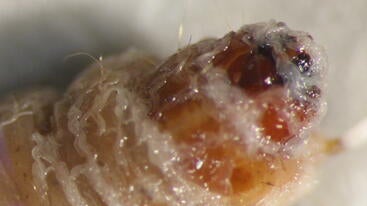
S. adamsi emerging from hostWe have characterized a new species of entomopathogenic nematode (EPN). This EPN was isolated from Thailand and falls within the Longicaudatum clade, being closely related to Steinernema hermaphroditum. The nematode was named after Dr. Byron Adams, who was Dr. Dillman’s undergraduate mentor and who introduced Dr. Dillman to EPNs in 2003. Steinernema adamsi is the newest EPN to be described and has much to teach us about how nematodes parasitize insects. It may also be useful in biological control. A UCR press release has additional information.

css.php